
Agentic Commerce — Where Are We?
 HASHKEY CAPITAL
Reading Time: 14.09Min
HASHKEY CAPITAL
Reading Time: 14.09Min
Agentic commerce, the buzzword of 2025 has become a leading narrative in 2025, promising to transform the way we engage and transact with online services through agents that represent us.
AI innovation continues to accelerate at a breakneck pace. Earlier this year, we saw intense competition among LLM providers enhancing model reasoning. Now, with frontier models converging in performance, attention has shifted toward the development of AI agents capable of autonomously completing tasks on behalf of users. These agents typically exist within chat interfaces, performing text-based, non-financial actions for users. However, with payment and technology companies racing to extend the boundaries of agentic capabilities, this nascent field known as agentic commerce is driving the next wave of innovation.
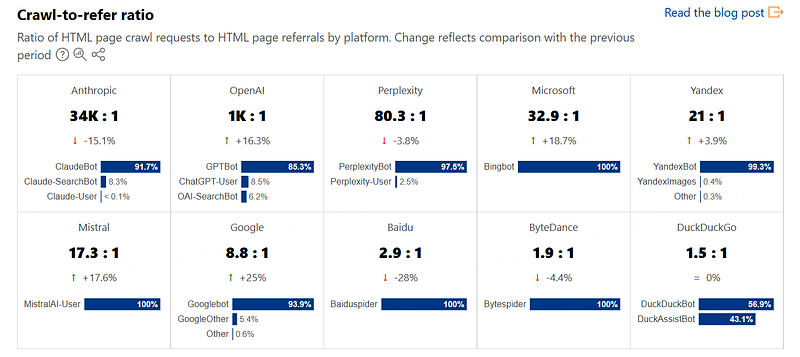
Today, payments still heavily rely on manual user involvement — fingerprint or facial verification to authenticate transactions, entering sensitive financial details, approving each purchase individually, and navigating fragmented checkout flows across apps and websites. Additionally, with LLMs pushing the boundaries of their capabilities, the demand for quality data has proliferated, leading to AI bots, crawlers putting pressure on websites and content creators who are not being compensated for agent-driven consumption. The crawl-to-refer ratio which refers to the referral traffic introduced by AI bots is a metric commonly used to gauge the value extraction activities of these bots compared to the traffic contribution they provide to websites. Recent numbers have shown that currently Anthropic’s ClaudeBot has the highest HTTP crawls to page referrals at 34K: 1, followed by OpenAI’s GPTBot at 1K:1.
New entrants of players such as Perplexity and OpenAI are shaping a new type of commerce, one that is powered by generative AI and existing right within users’ chat interface. OpenAI’s 5.1 recently released a shopping agent, powered by GPT-5-Thinking-mini, one that delivered product accuracy of 64% according to internal benchmarks, entrenching deeper into the retail commerce market after first launching Instant Checkout in September.
While the adoption of agentic commerce remains nascent, the dual catalysts mentioned are shaping a new paradigm — one where autonomous agents and humans participate alongside each other, redefining how value and online content are created, exchanged, and consumed.
The Emerging Agentic Stack
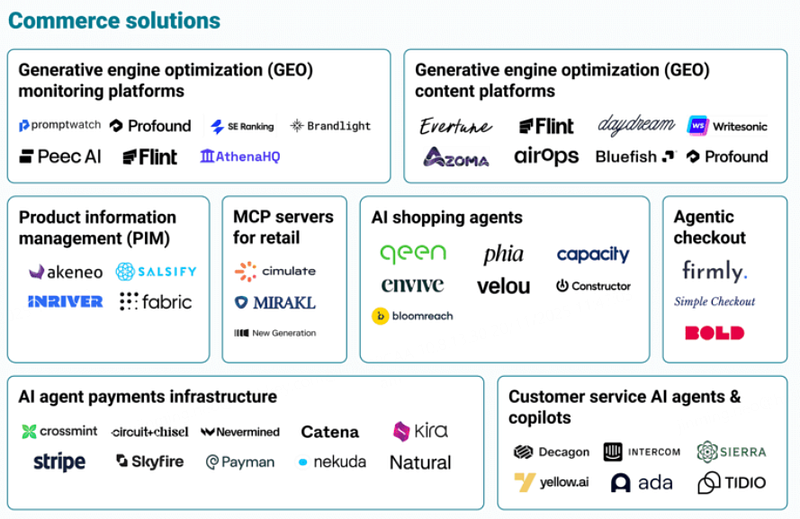
Across both Web2 and Web3, the agentic tech stack is converging around three layers:
Intent & policy & Verification— User-defined parameters on what an agent is allowed to do to meet users’ intentions. Beyond intents, this layer is also important to establish the foundation for verifiable credentials, ensuring that agents are directly owned by the users. For example, Google’s AP2 provides clearly defined 3 core mandates: Intent Mandates, Cart Mandates, and Payment Mandates that ensure that every transaction by the agent is authorized by the user.
Commerce protocol — how agents and merchants discover and create carts, prices, and verify credentials. Authentication matters here ensuring that agents truly represent their users, have received authorization to act, thus preventing fraudulent transactions. Protocols in this layer also ensure that payments are secured, not leaked and abused by malicious agents.
Settlement rails — how the actual payment is executed and finalized. With stablecoins legalized and regulated through the GENIUS Act, payment rails have now expanded to encompass traditional payments and crypto rails. Stablecoins and blockchains play a crucial role in facilitating seamless, high volume, low cost transactions required in an agentic economy.
These set up the fundamentals to enable agentic commerce whose workflow can be generally illustrated as such:
User agent submitting authorization and intent mandate.
This triggers a purchase event on the merchant’s server.
Agent-merchant communication. This stage is where agent-to-agent communication takes place, purchase terms, verifiable credentials on both the user and merchant sides, checking if the user agent is verified and received approval.
Payment rails. Executing based on preferred payment method.
Confirmation and delivery of goods and services.
Current Agentic Stack in Web2 and Web3 today
Agent Orchestration frameworks
Google’s AP2: AP2 sits mostly in the authorization and traceability layer. It defines roles (user, agent, merchant, payment provider) and introduces cryptographically signed mandates that encode what an agent may do — create carts, complete purchases, manage subscriptions, etc. This ensures a non-repudiable audit trail for conflict resolution. Additionally, AP2 is also payment agnostic, supporting payment through traditional fiat and stablecoin rails. Institutional adoption is high with the AP2 ecosystem now encompassing more than 60 partners from payment providers, exchanges, banks to web3 infra technology companies. However, the current rollout remains in the testing phase.
OpenAI and Stripe jointly developed ACP: ACP currently underpins ChatGPT Commerce, allowing agent-driven discovery and purchasing from merchant catalogues such as Etsy and Shopify. Through the use of payment tokens like Stripe’s Shared Payment Token, payment credentials and risk signals are passed securely to merchants without exposing the underlying raw card information. SPTs are also time-constrained with a cap amount to prevent misuse. With more than 200M+ users on Stripe’s Link, this partnership brings extensive distribution for agent-powered transactions. Adoption currently is more niche towards e-commerce, but with high potential to include other large commerce players.
Verifiable Credentials and Payment Execution Layer
Mastercard AgentPay: Mastercard’s Agent Pay Acceptance Framework can be integrated with leading orchestration protocols and tools such as MCP, ACP, AP2 and works to provide a unified way for agents to securely execute transactions. Only agents registered with the Mastercard Agent Pay Acceptance Framework are allowed to transact on the Mastercard Network, filtering out malicious bots and ensuring that all transactions are traceable. Users are also able to set operating conditions (eg. spend limits, merchant categories, risk limit etc.) for their agents. Through agentic tokens issued by issuers, user’s sensitive financial information will not be seen by the agents and transactions executed on Mastercard network are adhered to existing AML/KYC checks. Starting this holiday season, Mastercard will enable agentic commerce for U.S. Mastercard holders with global rollout expected afterwards.
Visa Trusted Agent Protocol (TAP): The Trusted Agent Protocol developed in collaboration with Cloudflare is a cryptographic framework by Visa that uses cryptographic signatures such as HTTP message signing / Web Bot Auth that ensures that transactions come from authenticated agents only. Every request from a trusted agent is cryptographically locked to a merchant’s site and exact page ensuring that the signature which also comes with unique, time sensitive elements cannot be used elsewhere. With an extensive ecosystem partnership, TAP aims to become a complementary layer to Stripe and OpenAI’s ACP while also being payment rail agnostic working alongside Coinbase’s x402 for integration.
Early adopters such as Shopify are already demonstrating how agentic commerce can be deployed in real-world scenarios. Shopify has integrated its Sidekick commerce agent into its platform and partnered with OpenAI to make merchant catalogs accessible directly within chat interfaces. Perplexity has taken a similar approach with its “Buy with Pro” feature, which provides an API for merchants (including Shopify sellers) to share product information and benefit from Perplexity’s distribution. Together, these early implementations signal that agentic commerce is moving toward mainstream adoption, as key metrics such as conversion rates, dropout rates, and ARPU show improvement through AI-driven insights and more interactive consumer experiences. Early initiatives have proven this traction with conversion rate from ChatGPT being 11.4%, higher than organic search of 5.3%.
Web3 Agentic Commerce
Web3 Orchestration Layer
Virtuals Protocol Agent Commerce Protocol (ACP): Building upon Virtuals Protocol G.A.M.E agentic framework, the team has also launched a smart-contract–based escrow + verification for multi-agent coordination known as the Agent Commerce Protocol. Agents need to be registered to the ACP network in order to be discovered for services. Agentic tasks follow a systematic process of request -> negotiation -> transaction -> evaluation -> completion while payments are handled via escrowed, smart contract logic ensuring agreements are recorded and tracked onchain. Through the ACP SDK, registered sellers can list their offerings through an API endpoint for other registered buyer agents to interact. An early implementation of ACP can be seen in Virtuals Protocol’s Butler Agent, which interacts with users and directs them to the most relevant agents within the Virtuals directory based on their specific needs. Currently, ACP is still in a nascent phase with activity dominated mainly by DeFi trading agents.
Skyfire Agent Checkout: Built on Skyfire Know Your Agent (KYA) protocol, Agent Checkout equips agents with programmable wallets and payments, supporting agent funding via traditional payment and onchain rails. KYA Protocol is compatible with existing standards and tools such as MCP, ACP, AP2, A2A etc. Using Skyfire’s API, identity authentication and payment metadata are included inside its identity-linked lightweight JSON Web Token. The buyer agent simply sends the token and after verification of cryptographic signature, seller deliver services and charge the Pay token, completing the entire commerce journey in a secure, verifiable approach.
Catena Labs’ Agent Commerce Kit: Agent Commerce Kit offers 2 key features: ACK-ID and ACK-Pay. By leveraging open standards of W3C such as decentralized identifiers and verifiable credentials. DIDs provide a persistent, cryptographically verifiable identifier for agents, wallets or entity owners. Verifiable credentials, issued by credible issuers verifies ownership between agent and user. Beyond identity, ACK-Pay extends the HTTP 402 framework and provides an open-source, transport-agnostic standard that works across HTTP, WebSockets, A2A, and other messaging layers. It is also payment-agnostic, allowing agents to initiate and receive payments across both traditional and crypto rails. Together, these capabilities enable interoperable settlement flows for agent-to-merchant commerce.
Payment Rails/Infrastructure
Coinbase Payment MCP: Coinbase Payment MCP allows LLMs to have their own wallet, onramp and make payments without the need for an API key. Additionally, agents also operate within safe boundaries as users can configure spending limits and authorizations. With x402 Bazaar Explorer, agents can discover services and APIs that accept x402 transactions.
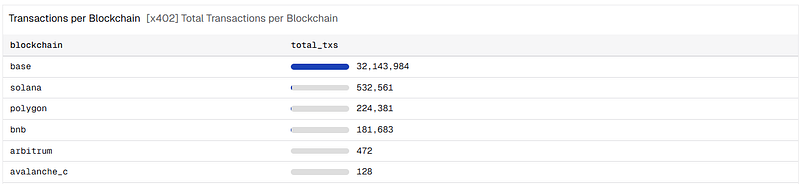
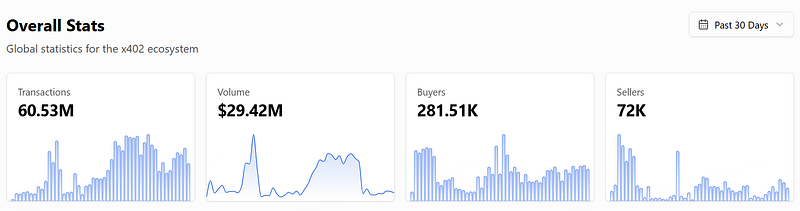
Coinbase x402: Coinbase x402 is a payment protocol that can complement agentic coordination layers such as AP2, ACP, enabling agents to autonomously pay for services. The value of x402 is that unlike traditional payment routes that make micropayments unviable through hefty network fees, x402 transactions enable stablecoin-based payments that are cheaper, faster and allow agents to autonomously transact, opening up new payment models like usage-based billing, metered APIs, outcome-based pricing, micropayments etc. Agents also do not need to have an offchain KYC identity which is needed to access legacy payment rails since x402 is made for machine-to-machine transactions and crypto wallet works just fine. A key enabler to x402 success is the facilitator whose role is to verify and settle payments on behalf of businesses, abstracting away blockchain complexity while leveraging the efficiency of crypto rails. At present, Coinbase serves as the primary facilitator within the x402 ecosystem, with notable facilitators such as DayDreams and PayAI also supporting payment execution. Most live x402 activity currently occurs on Base, despite the protocol itself being designed to remain chain-agnostic. A full list of the x402 ecosystem can be viewed here.


L402: L402 is a payment gated version leveraging HTTP 402 protocol on the Lightning Network, built on Macaroons (capability-based authentication token) and a preimage hash. Today L402 is being actively used by Lightning Pool and Lightning Loop to authenticate users and for metered API authentication.
Web3 Verification Layer
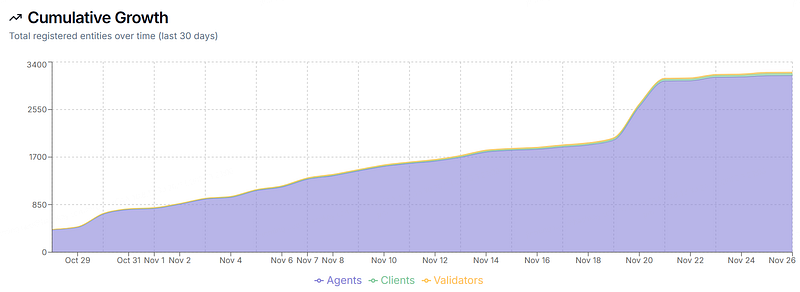
ERC-8004: ERC-8004 developed by the Ethereum Foundation and championed by the DeAI team, serves to provide a framework for trustless agent interactions by offering 3 main onchain registries namely: identity, reputation and validation. This system ensures that agent registered is discoverable, traceable and verified through zkML proofs or TEE oracles. Presently, experimentation in ERC-8004 remains vibrant although not in mainnet deployment, with more than 3.1K agents registered onchain to date. For more information about ERC-8004, we did a separate report here.
APRO’s AI native oracle: APRO acts as the verification and auditability layer in the x402-based agentic payment stack. By leveraging on its multi-layer AgentText Transfer Protocol Secure (ATTPs) communication framework, it is able to aggregate multi-chain event proofs, EIP-712/JSON-LD compatible attestations, and ATTP-secured agent messages — safeguarding the integrity of AI-executed transactions and provide end-to-end traceability.
Brevis: Brevis offers its zk proof technology to ensure that agents have actually completed the tasks given. Its recent partnership with Kite AI will see Brevis zk-proofs being gradually implemented across the network starting with Kite’s agentic SLA contracts with each metric submitting an attestation for onchain enforcement. Off-chain micropayments executed by agents can also be batched and verified by Brevis zk circuits, enabling verifiable, cheap, and scalable high volume transactions.
Key Developments and Potential Use Case
With existing infrastructure, protocols and frameworks laying the foundation for agentic commerce, we think the untapped opportunity is substantial. As AI begins to penetrate service industries worth trillions of dollars, sectors such as e-commerce and content creation are poised to be among the first to experience meaningful disruption and value creation. To size the market opportunity, we will look at conservative estimates of the total addressable market (TAM), Serviceable Available Market (SAM), Serviceable Obtainable Market (SOM) in 2025.
TAM: The combination of Software-as-a-service and Service-as-a-software: ~$7.6T encompassing digital commerce ($7.3T) and AI-API ($63B), SaaS ($300B) economy.
SAM: Reports by McKinsey showed that 10% of consumers use AI to start their shopping journey, underscoring reliance on consultative, AI-led shopping experience. This translates to potentially a $760B market driven by broad usage of pay per request API monetization, digital commerce, onchain microtransactions, creator monetization.
SOM: Assigning a conservative estimate of 0.5%, the SOM is $38B with early adopters being e-commerce companies, AI labs, software companies, onchain agentic protocols integrating x402, ACP, AP2 etc.
Agentic Commerce Opportunities in Web3:
Payment protocols: x402 paved the way for agentic commerce to occur onchain. Similar iterations leveraging the HTTP 402 status code such as L402, b402 etc are all channels that facilitate agentic transaction onchain.
Rise of agentic wallets: Wallets that provide agents with an identity and also compatible with payment railways such as x402. A few notable developments. 1) Privy and Langchain partnered to enable agents to have access to wallets. 2) Coinbase’s CDP wallet that is compatible with x402 and enables agents to operate safely under programmable transaction rules. 3) Crossmint offers a unified API for agents that abstracts x402, AP2, and emerging agentic-commerce frameworks, while also providing native multichain support from day one of integration.
Facilitators: the growing adoption of x402 is leading to players like Coinbase, Questflow, PayFi, Daydreams emerging as payment facilitators and capturing a new revenue opportunity.
SDKs and Toolings: Players like ChaosChain are building the necessary tools for onchain identity and reputation systems. ChaosChain integrates with Chainlink’s CRE to establish pre-checks prior payment execution enabling businesses to trust agents with real value. Skyfire’s KYA and Pay features facilitates seamless interaction between verified buyer agent and seller agent. Security tools such as GoPlus Security also play an important role in identifying agentic payment risks in Web3. Cross-chain agent toolings such as Bitte Protocol operate as a no-code agent builder, allowing users to use natural language prompts to deploy multi-chain agents via NEAR Intents.
Agent Marketplaces: Questflow, Olas, Virtuals Protocols are examples of platforms that allow agents to discover, coordinate and transact with each other.
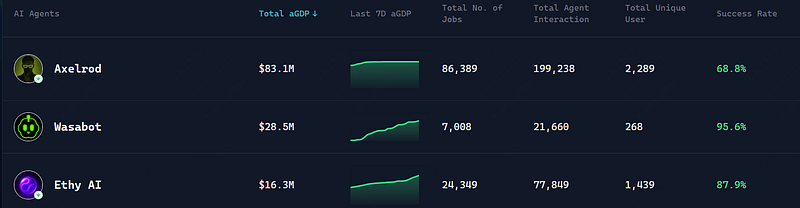
DeFi/Trading Agents: Axelrod, Wasabot, Ethy AI are agents that perform token analysis and execute trades autonomously across DeFi venues to optimize yields. Currently, these agents ranked top 3 within Virtuals Protocol agentic ecosystem. Giza Agents also enables web3-native protocols to leverage agents to optimize their treasury onchain. Thus far, more than 600,000 thousand agentic transactions and $3B in volume have been executed by Giza, underscoring the rising role of agents in abstracting away DeFi complexity while optimizing for onchain yields.
Agent-focused chains: While most agentic activities occur on Base and Solana, the rise of agent-focused orchestration blockchains like Kite AI and NEAR can encourage the development of AI-native applications and toolings to capitalize on the agentic commerce economy. NEAR recently outlined its development roadmap for Agent Interaction and Transaction Protocol (AITP), which remains in active development. Together with NEAR-native components such as Chain Signatures and Near Intent, these initiatives form the foundational infrastructure for enabling a secure, multi-chain, agent-driven future.
Outlook
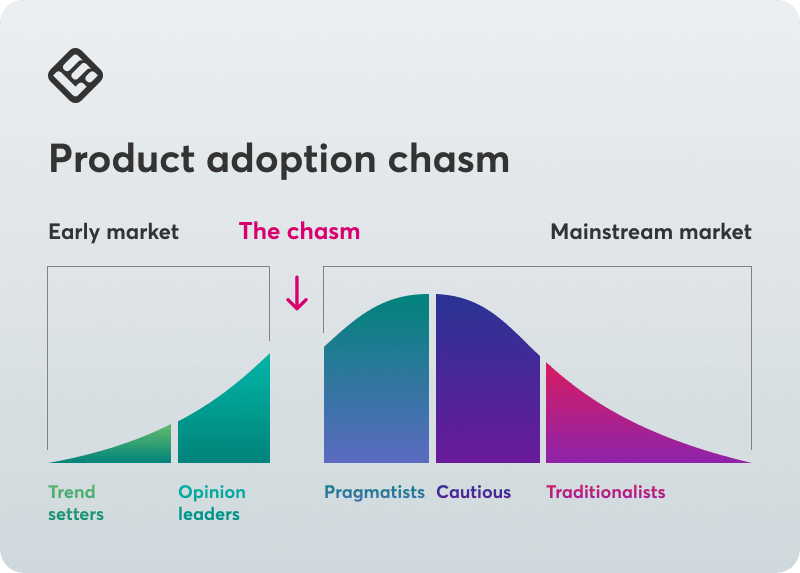
Based on the widely adopted product adoption map, it is clear that current developments reside in the early market stage, where trend setters integrate innovative agentic protocols to enable commerce functionalities. While agents today still require some degree of user involvement since it is dealing with sensitive financial information, ongoing advancements aim to progressively abstract these layers of interaction. Integrations with blockchain infrastructure are further enhancing this trajectory by enabling faster, lower-cost, and verifiable transactions.
Agentic commerce is therefore well-positioned to evolve from early-stage implementation to being horizontally-integrated across different commerce categories over the coming decade. According to McKinsey, AI agents that autonomously discover, negotiate and transact could orchestrate US retail revenue of up to $1 trillion by 2030 and global flows of $3–5 trillion. Lastly, from an investment and product opportunity perspective, I am excited about:
Emerging role of facilitators as the next-gen payment service providers tailored for agents. While this field is currently dominated by Coinbase, the value capture opportunity is huge as incumbents and new players emerge to provide enterprise-grade security and payment processing.
Widespread use of agentic wallet as the operating system for machine spending. Underlying blockchains that are tailored for agentic payments, supporting secure, low costs, high throughput transactions, and have Web2 institutions onboarded will benefit.
The intent layer presents a narrow investment opportunity, given the low barrier to entry by existing incumbents, and how there will eventually be a universal/convergence to a few intent standards leading to low monetization opportunities. However competitive advantage can be maintained by integrating across the 3 agentic commerce stacks highlighted earlier which many players are already doing.